

canva x coachella + disinfluencer
From Canva global dominance to people simply posting content on youtube… there are a few things I’ve been reminded of and know for sure:
The need for content is infinite and most content can age just fine!
Real or polished, raw or low-fi — it doesn’t really matter how it’s made.
What matters is the idea, the execution, and then the third step… posting it online.
As a Graphic Designer who trained in Quarkxpress (with a boss made me print my work out in seps #IYKYN) all the AI magic Canva can do, it still starts with a human idea and an idea only matters when it’s paired with action. This is why canva rocks!!!
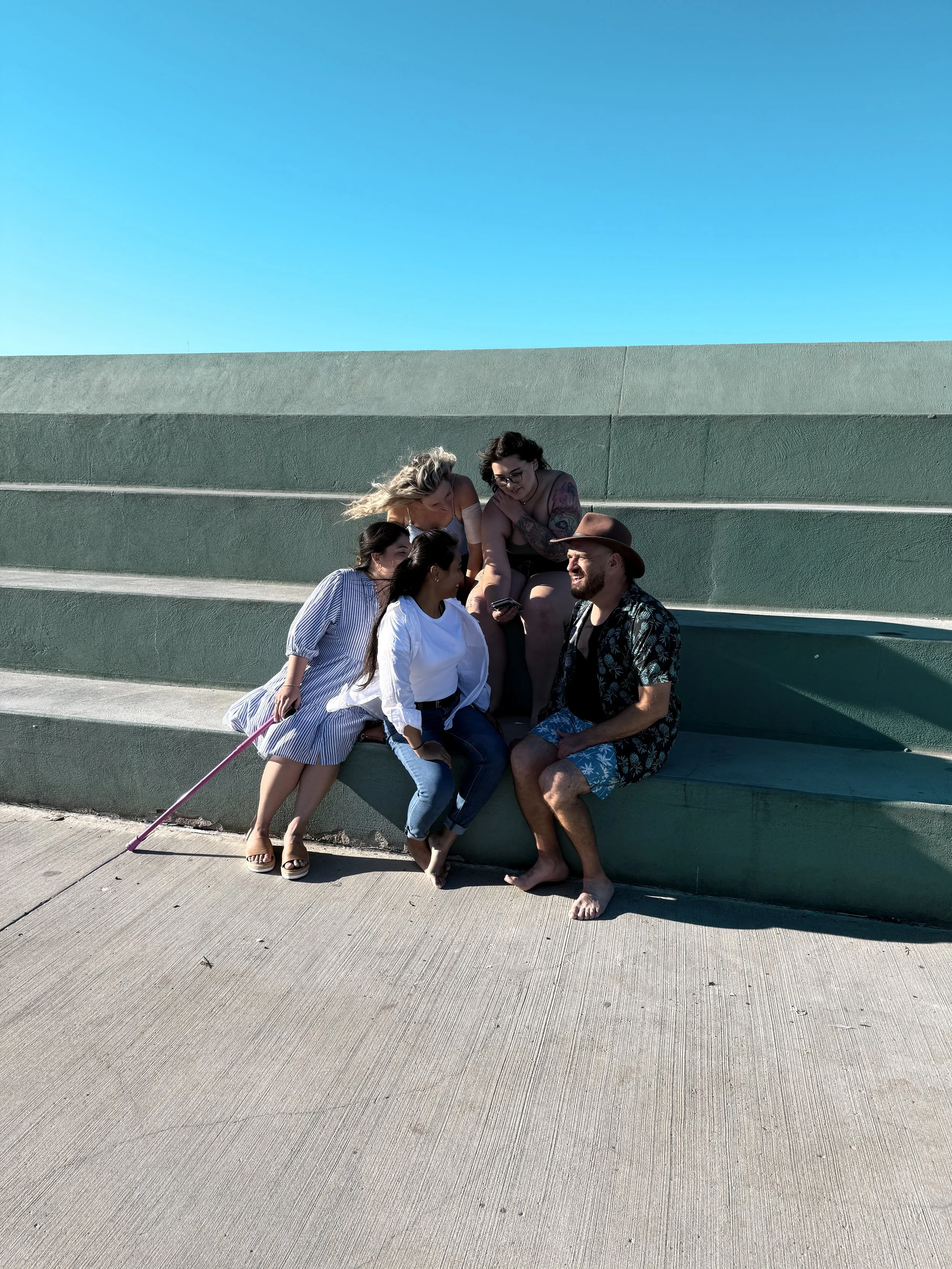
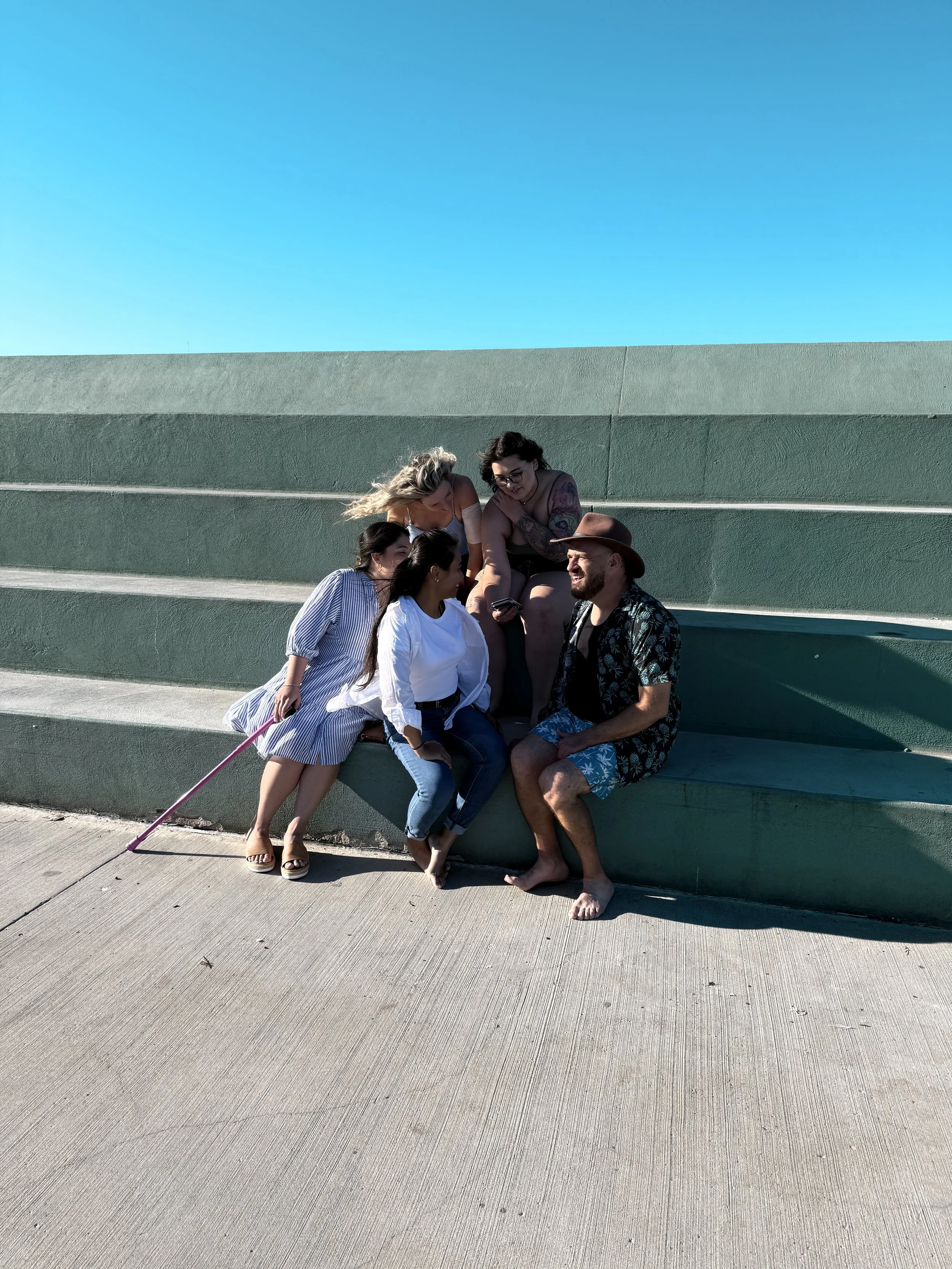
A sneak peek of photos from our Newcastle shoot. ID also in alt txt.
Ideas are easy. Implementation is hard.— Guy Kawasaki
So consider this your sign. Post the thing. Share the idea. Document the journey.
AND if you care about representation, start with this simple shift:
Make an accessibility statement. Then act on it. Don’t just talk about it.
AND if you want images that actually reflect real people, real stories, and real inclusion…
disinfluencer is where you go.
Don’t give up!
I don’t know who needs to hear this, I am guessing it is a few of you … don’t give up!
This morning I jumped out of bed at 6am to scan my b-roll from yesterday’s shoot.
A month before life blew up with Josh losing his transplant last year, I had a serious chat with one of my mentors. I was doing all the things, and with everyone loving what I do, sales were still slow. My mentor said to me… come April 1st, make a decision: wind up for the financial year or keep going. But until then, just keep going.
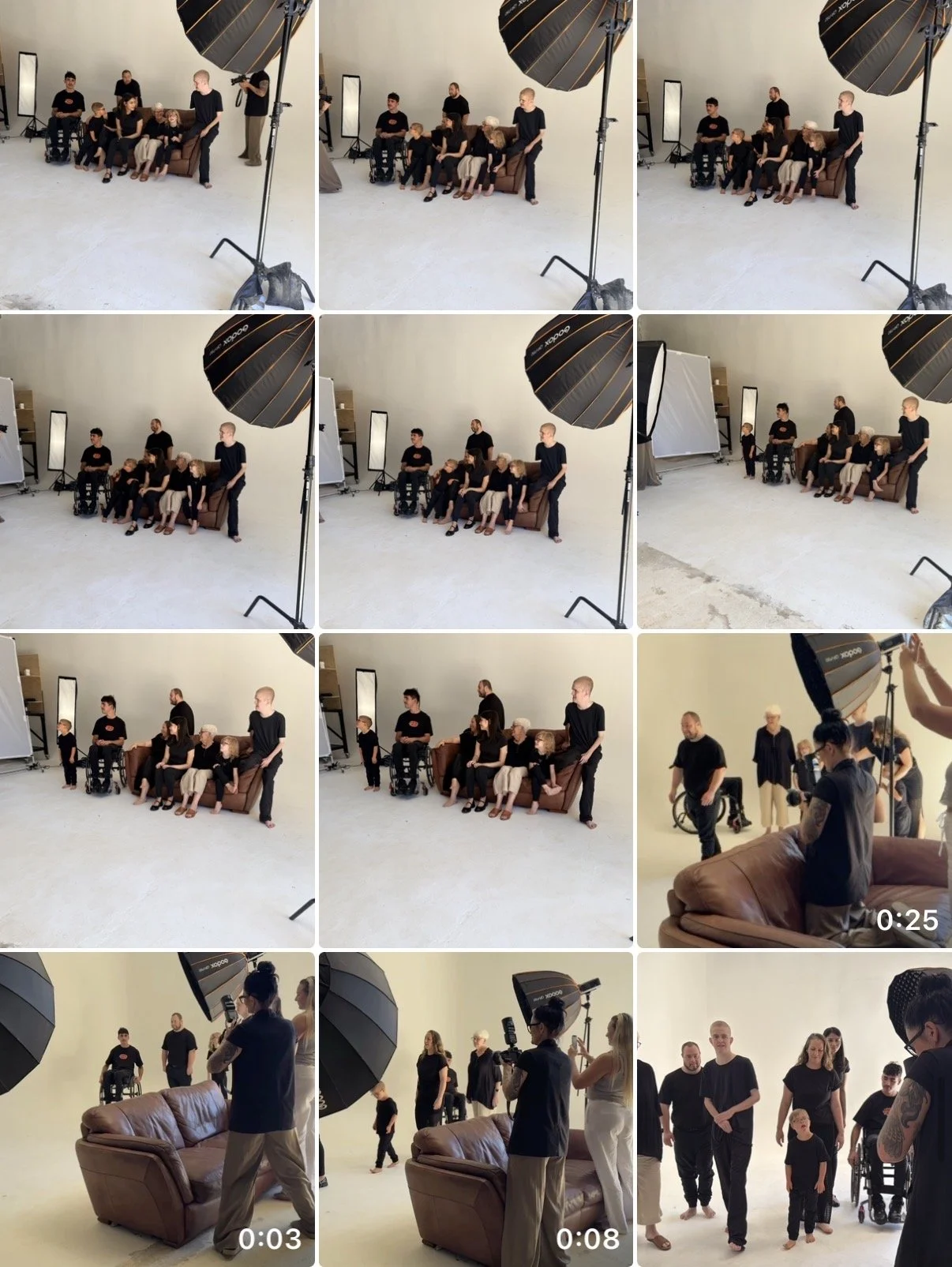
Screen shot of b-roll from our photoshoot
I talk often about not giving up, but it is so hard out there — and you don’t even need me to tell you that. But wow, I didn’t even dare to dream I would be where I am today. And now, sitting here, I have big plans and even bigger dreams for Disinfluencer.
Yesterday’s shoot was our most ambitious yet, and there was a moment where I just paused and took it in — the people, the energy, the intention behind it all. It felt like one of those “this is why I kept going” moments.
It is also so surreal having my Josh on set, looking like nothing happened and like he didn’t just spend months in hospital and is now in kidney failure, on dialysis three times a week! Life is absolutely wild like that… holding beauty and challenge at the same time, in the same breath.
And maybe that’s the point. You don’t always get the version of the journey you expected, but if you keep showing up, keep moving, keep creating… things have a way of meeting you where you are.
I don’t know who needs to hear this today, but if you’re in the thick of it, unsure, tired, questioning everything… just keep going.
This is what accessibility looks like!
When most people think of inclusion or accessibility, they think wheelchairs and ramps but access and inclusion is just about making things available to everyone.
Now this is Ellie's kettle (pictured below) but I can see so many use cases for it as well as it's a cool design and even cooler innovation, I just bought one myself! Not sponsored, just sharing the love! Click the pic #notsponsored!
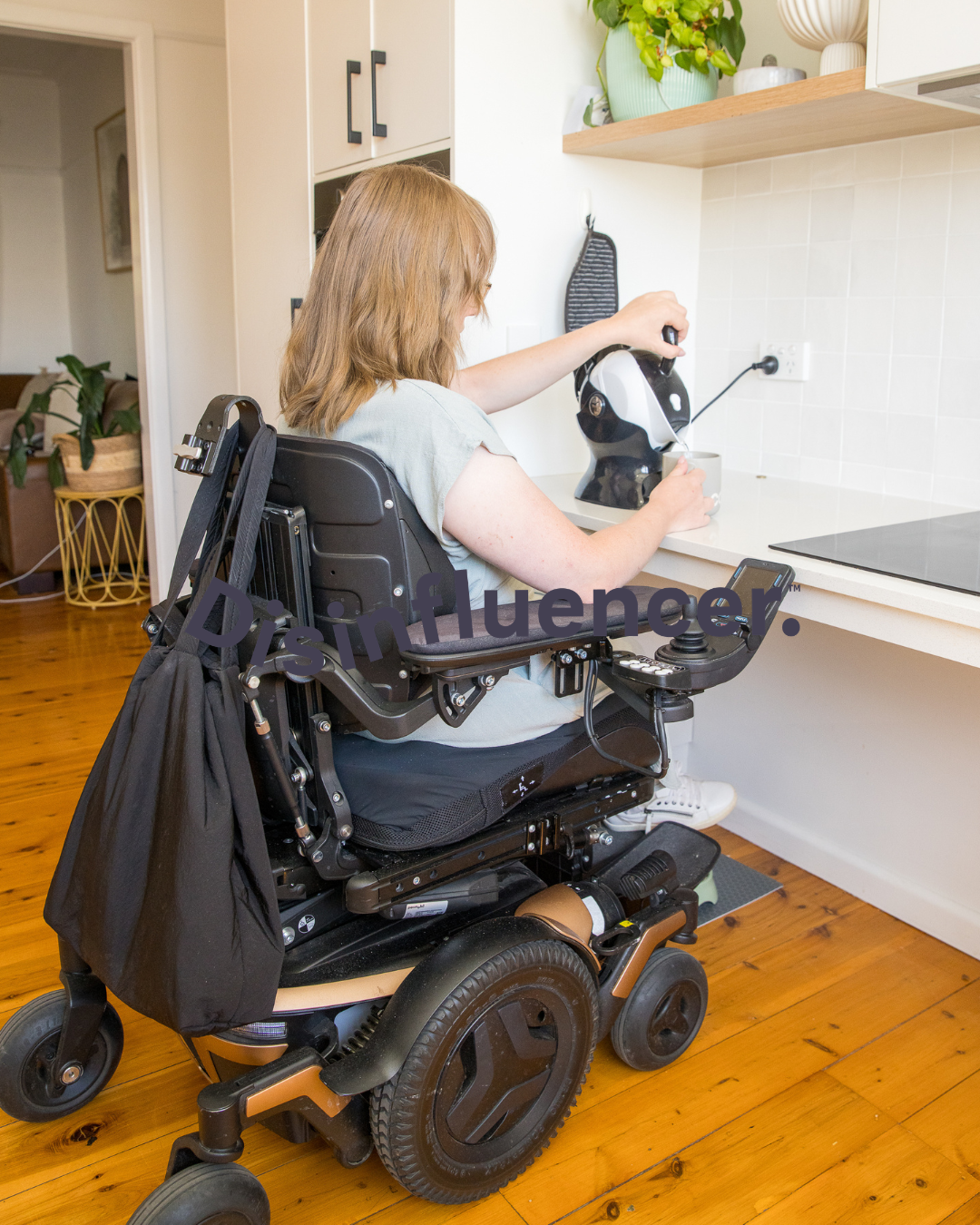
Image Description: Ellie, making a cuppa with her Accessible Kettle. Image Description also inalt txt.
Just one of the many cool photos we took on the weekend, in the disinfluencer inclusive stock library real soon!
Want to see the Disinfluencer Inclusive Library?
This kettle just keeps on giving, I will be using this example in my Tourism talk I am doing next week, not because I am obsessed (I AM) but because we often assume what access and inclusion is, without asking and on the flip side many businesses don't know where to start or what to do, so they do something and as my mate Kelly from Knowable.me says ...
"Inclusion is like cheese, you can never have to much, but some is always better than none"
Simone
New Images
The silly season is over and looks like everyone is ready to roll YAY! *finally*
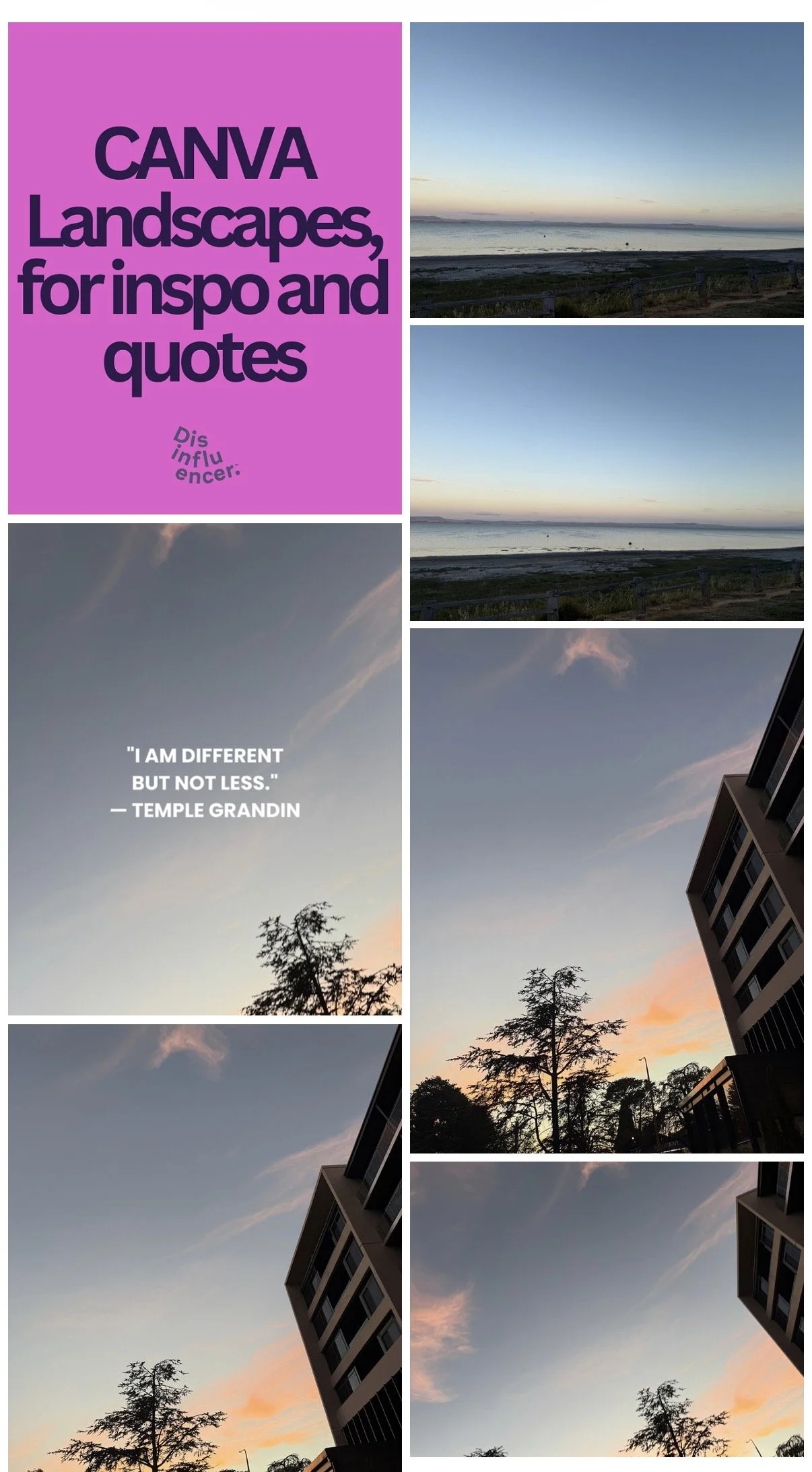
We welcomed a whole bunch of new clients to disinfluencer images in Feb and I can't wait to see those images in the wild. We added over 135 new images, we have 2 shoots booked in the next 6 weeks so we will be adding a lot more images to the library AND I finally got around to adding my landscapes for "inspo and quotes" even included the canva template to create your own!
The D. Biz Club is humming along and our members are getting results and every second day we sell an Accessibility Statement. We have tweaked our mission statement, so true to our mission we really are ...
"Taking disability mainstream ~ one image, brand & biz at a time"
I am not gonna lie, there's been so many times I felt like giving up, not because it is hard, but it has personally been a challenging few months and just when I think, this week - something else happens and I want to give so much more to the biz, especially now I feel we have hit our straps, but I just do what I can, and seems like it is working, so I just keep swimming. Thanks Dory ... * note to self, need an ocean shot to create that quote!
So thanks for sticking around, I really do appreciate it and if you want to see the disinfluencer inclusive stock library, we are now offering 30 days access ...
LookLibrary: https://www.disinfluencer.co/looklibrary
Simone
Image Description: A screenshot of the disinfluencer inclusive stock library collection. The words CANVA landscapes for inspo and quotes and some sunset images. Image Description also in alt txt.
Marketing with Heart
The D.LOVE campaign is LIVE!
What if inclusion looked normal? Warm. Creative. Everyday.
Not a special report.
Not a once-a-year post.
Not the same ol terrible stock photo - not our images, our images ROCK!
Just heart. Everywhere.
Hands over hearts. Smiling eyes. Coffee with heart latte art. Heart-shaped pasta. Real creators. DIY images. Small moments that feel human, because that’s what audiences actually connect with.
We say “be inclusive” but what does that actually look like when you’re a marketer staring at a blank brief on a Tuesday afternoon?
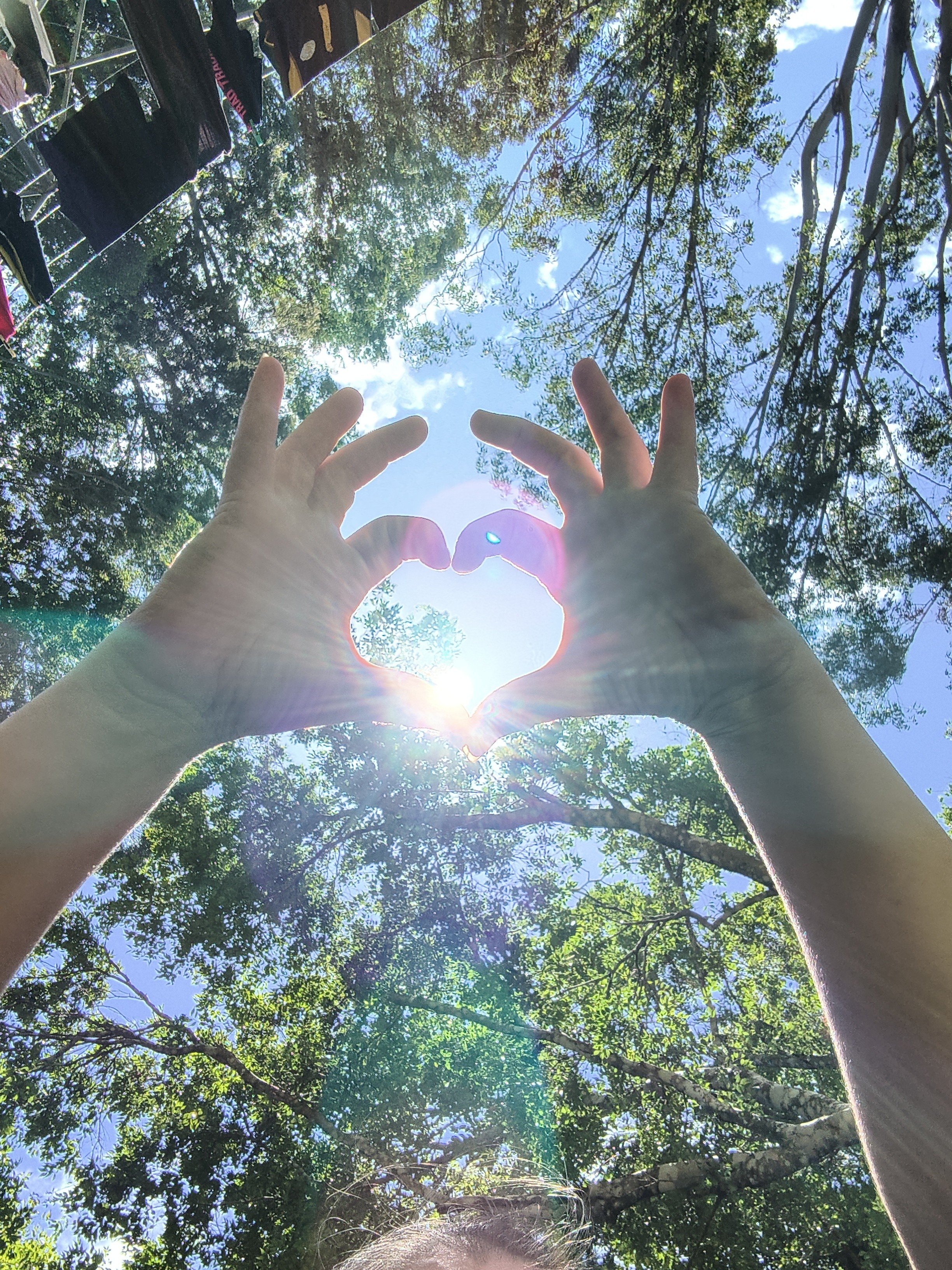
Hayley - Paid Contributor with her Heart Sun photo. Image Description also in alt txt
It looks like choosing images that reflect real people.
Real bodies. Real families. Real difference.
Not as inspiration as reality.
And here’s the truth: most marketers I talk to want to be inclusive. They’re not resisting it. They’re not anti-diversity villains. They’re just busy, under pressure, and working with what’s easy and available.
So I built what’s easy and available.
This campaign is powered by our creators, paid contributors, submitting raw, simple, human images. Not polished ad shoots.
Because inclusive marketing doesn’t need a $50,000 production budget.
It needs intention.
We’re turning those images into quasi ads, editorial layouts, and a zine — to show how brands can actually use inclusive visuals in creative work. Not just talk about it, do it.
And yes we’re selling the image bundle too. Because creators deserve to be paid. Representation deserves to have value. Inclusion isn’t charity — it’s creative excellence.
The other reason I made this campaign?
Because I don’t have endless energy. I’m a carer. I run a social enterprise. I live in the real world of constraint. And I wanted to prove, mostly to myself that meaningful campaigns can be built lean, scrappy, and full of heart.
No gatekeeping. No perfectionism. No waiting until someday.
Just start. Make. Share. Include.
Marketing with heart isn’t seasonal. It’s not just for Valentine’s Day. It’s not just for awareness months. It’s not just for disability campaigns.
It’s a creative standard.
Every brief.
Every brand.
Every day of the year.
If this campaign does one thing, I hope it shows marketers this:
You don’t need to be scared of inclusive creativity. You just need to put heart into it.
Simone <3
Dear Hairdressers: Help Us Get Our Kids’ Hair Cut
Some haircuts are easy. Some aren’t.
For kids with autism, sensory sensitivities, anxiety, or other disabilities, a simple trim can feel… well, overwhelming. For our family right now? A permacath in the chest makes hairwashing impossible, so I asked my awesome/fancy hairdresser to do a haircut and hair wash — because, honestly, all of the above.
And it made me think: how many times do we have to have this awkward conversation at the hairdresser? What training does the industry actually have? And if there was a real call for allyship, wouldn’t it start here, in the salon? Because who spills their guts anywhere else? Hairdressers are the safest place.
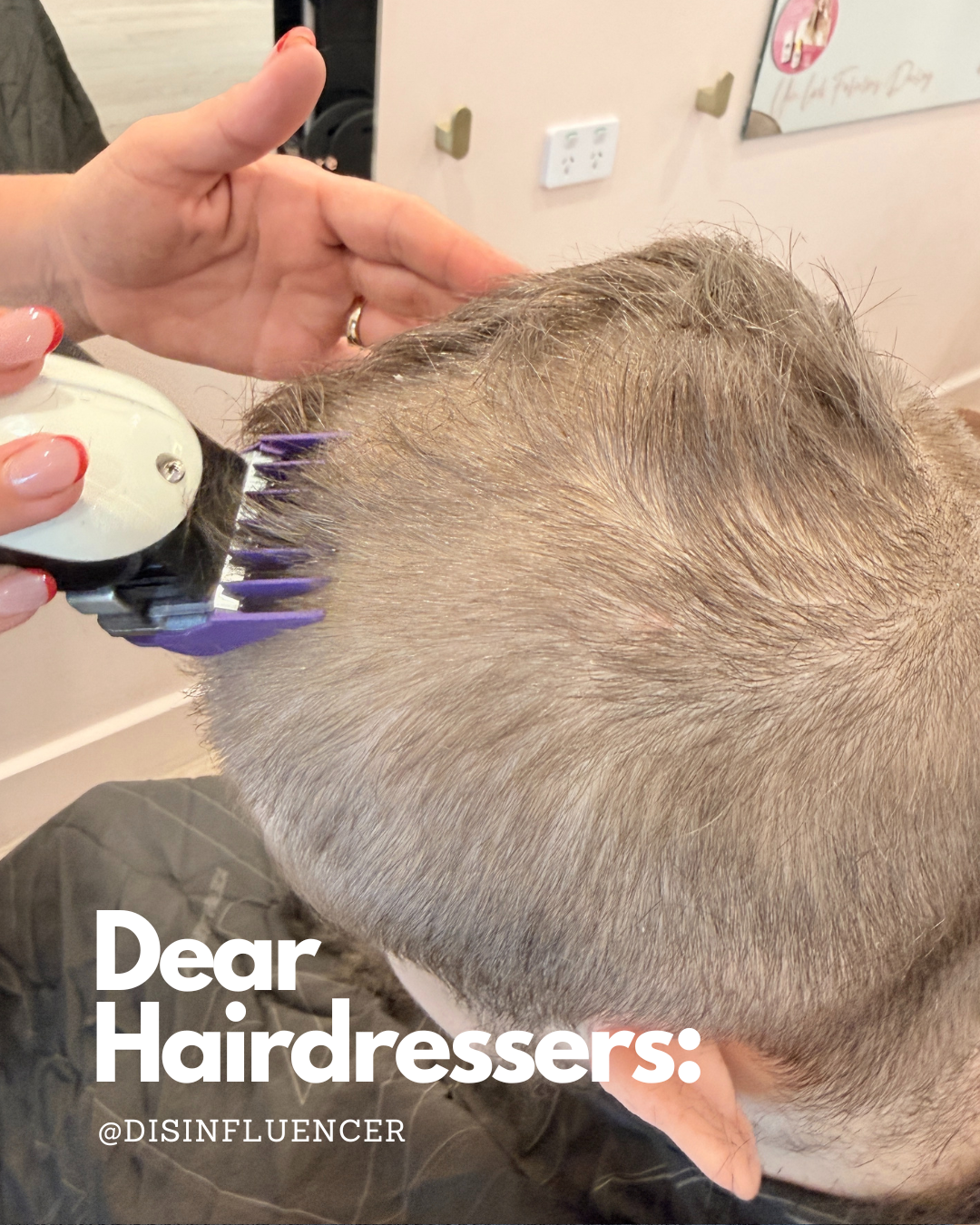
So here’s a little guide, straight from our chair, on how to make a haircut calm, kind, and inclusive.
1. Talk to the Person
Speak to them, not about them.
Ask simple questions:
“Is it okay if I touch your hair now?”
“Do you want the clippers or scissors?”
“Do you need a break?”
Even non-verbal responses matter, respect still lands.
2. Kindness Over Complexity
No need for baby talk or over-explaining.
Patience without pity.
Calm without judgement.
Respect without spectacle.
3. Show Tools Before Using Them
Clippers, scissors, combs, let them see, hear, touch if they want.
Explain what you’re about to do.
One step at a time.
4. Offer Breaks & Space
Don’t assume a meltdown or pause is a failure.
Let them move, adjust, or take a break without fanfare.
5. Be Mindful of Senses
Noise: clippers and dryers can be overwhelming.
Smells: strong products may trigger sensitivities.
Seating: let them choose what’s comfortable.
6. To Parents & Carers
You’re not “that family.”
You’re not overreacting.
You’re not doing it wrong.
Advocacy is hard work — you’re doing it right.
7. A Good Haircut is More Than Style
Haircuts are nice, a good experience is everything.
Treat kids with respect, patience, and dignity.
These small acts of kindness can change whether a family ever comes back.
Hairdressers, salon owners, stylists — who do we need to talk to about training, allyship, and making haircuts kinder for all kids?
Tag them. Share this. Let’s get the conversation happening where it matters — in the salon chair.Simone
ps - These images are part of our inclusive stock library, created to show real moments, not inspiration porn. This is what inclusion can look like. ✂️💛
Enter: Hermit Crabs, Robots and the Secret Life of Pets
Hermit crabs are often described as the easiest pet. Low maintenance. Low mess. Small-space living. No big setup. No perfection required.
That’s the point.
Low-fi living is having a moment and not just aesthetically. It’s about ease. Sustainability. Making choices that fit real life, not an aspirational version of it.
Low-fi campaigns sit in the same lane.
They don’t demand:
Big budgets
Big crews
Big energy
They meet people where they are.
When we talk about The Secret Life of Pets or robots in culture, we’re really talking about simplification, how people want life, creativity and consumption to feel lighter, easier and more manageable.
Hermit crabs aren’t aspirational pets, they’re practical ones.
Low-fi content isn’t aspirational marketing, it’s practical marketing.
And in a cost-of-living crisis, attention recession and burnout economy, that practicality is powerful.
Low-fi doesn’t mean low impact.
It means accessible, repeatable and human.
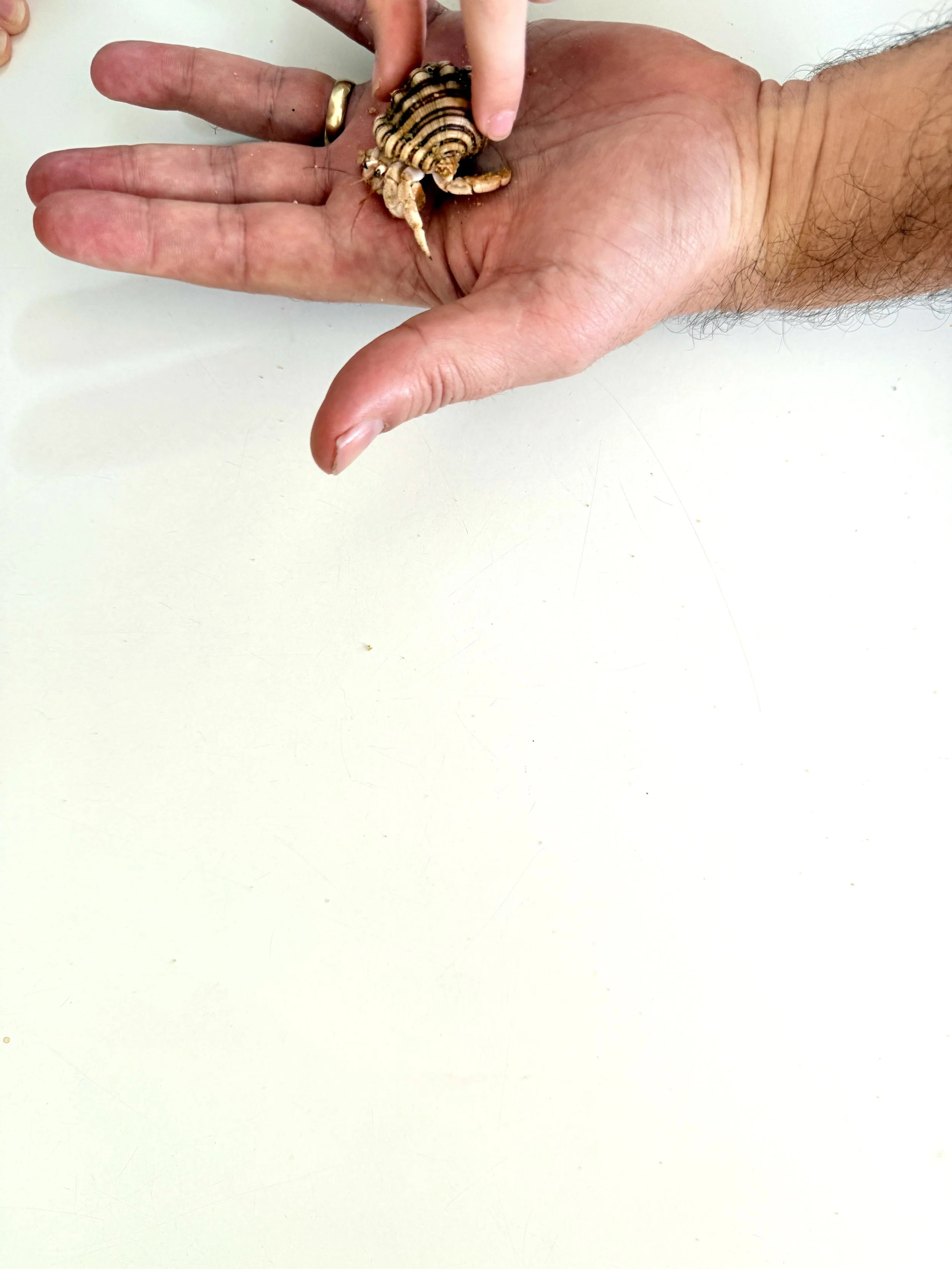
Image Description: An image of a hermit crab in a mans hand, with a chi9ld patting it, image from the disinfluencer inclusive stock library. Image description also in alt txt.
What brands should be paying attention to
Low‑fi campaigns aren’t a trend, they’re a signal.
A signal that audiences want:
Authentic storytelling
Inclusive representation
Less polish, more truth
Access over aesthetics
And here’s the kicker: inclusive campaigns perform better when they’re believable.
Disability doesn’t live in perfect studios. It lives in hotel rooms, messy bedrooms, kitchens, cars, hospital waiting rooms, and everyday moments.
Low‑fi lets that reality exist without apology.
What this means for Disinfluencer Images and beyond
This is exactly where Disinfluencer Images sits.
Yes, we’re an image library, but we’re also more than images.
We’re low‑fi by design.
We work with disabled talent who don’t need to be over‑produced, over‑directed or over‑explained to be powerful on camera. Real people. Real environments. Real moments.
The same reason RM Williams’ phone‑shot campaigns work is the reason disabled talent works best when you let them show up as they are.
Low‑fi removes friction.
It opens the door to talent who are often locked out of traditional production models, not because they lack skill or presence, but because the system wasn’t built for them.
We offer brands a different way in.
Not a casting scramble.
Not a glossy one‑off.
A practical, accessible, repeatable way to work with disabled talent — whether that’s through images, content, or low‑fi creative direction.
If you’re a brand like RM Williams — or want to move like one — this is your lane.
Call us
If you’re looking for:
A low‑fi entry point into disability representation
Disabled talent without the production headache
Content that feels human, not manufactured
Disinfluencer is your low‑fi way in. www.disinfluencer.co start with a LOOKBOOK
What does Harry Styles and Hermit Crabs have in common?
When we remove barriers, magic happens. Creativity can lead the charge simply by being inclusive.
It’s not even week three of January 2026 and low‑fi creative campaigns are already taking over Instagram. Grainy phone shots. Unstyled rooms. Real life energy. And audiences are loving it.
Let’s talk Harry Styles.
When we remove barriers, magic happens. Creativity can lead the charge simply by being inclusive.
It’s not even week three of January 2026 and low‑fi creative campaigns are already taking over Instagram. Grainy phone shots. Unstyled rooms. Real life energy. And audiences are loving it.
Let’s talk Harry Styles.
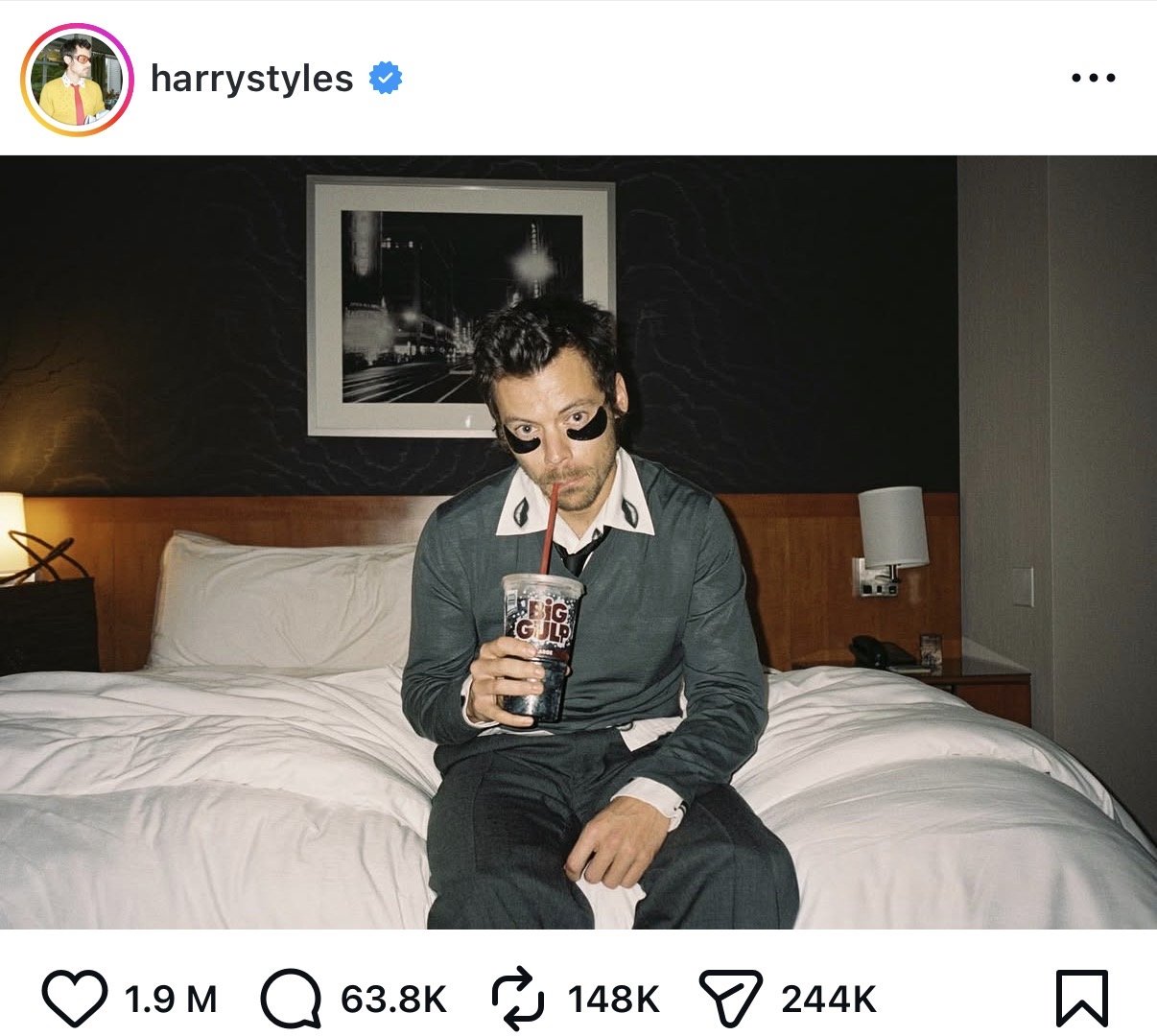
Image Description: A screen shot of Harry Styles instagram. Harry sitting on a bed in a hotel room, low fi and rumpled slurping a slurpee and wearing an under eye mask.
Last week Harry Styles announced his new album and world tour. The image with the post on the gram was a low-fi shot in a hotel room, rumpled (messy bed, stuff on the bedside table) and Harry with eye patches on, slurping a slurpee.
And it worked.
Because it felt human.
This isn’t just a pop star thing either. Iconic Australian brand RM Williams has been doing the same with their recent low‑fi, phone‑shot content — including their Outback Tom campaign. Less gloss. More grit. More real Australia.
Low‑fi isn’t lazy. It’s intentional.
So what does this have to do with disability?
Everything.
Low‑fi campaigns quietly remove barriers.
They don’t require:
Perfect bodies
Perfect homes
Expensive equipment
Studio access
“Looking the part”
That matters when you’re talking about disability representation, inclusive marketing, and who gets to show up in brand storytelling.
For many disabled people, high‑production campaigns are inaccessible by design. Physically. Financially. Creatively.
Low‑fi flips that.
A phone. A moment. A story.
That’s it.
And suddenly more people can participate, not just as talent, but as creators.
And for the hermit crabs, well that story is coming up next 🐚🤖
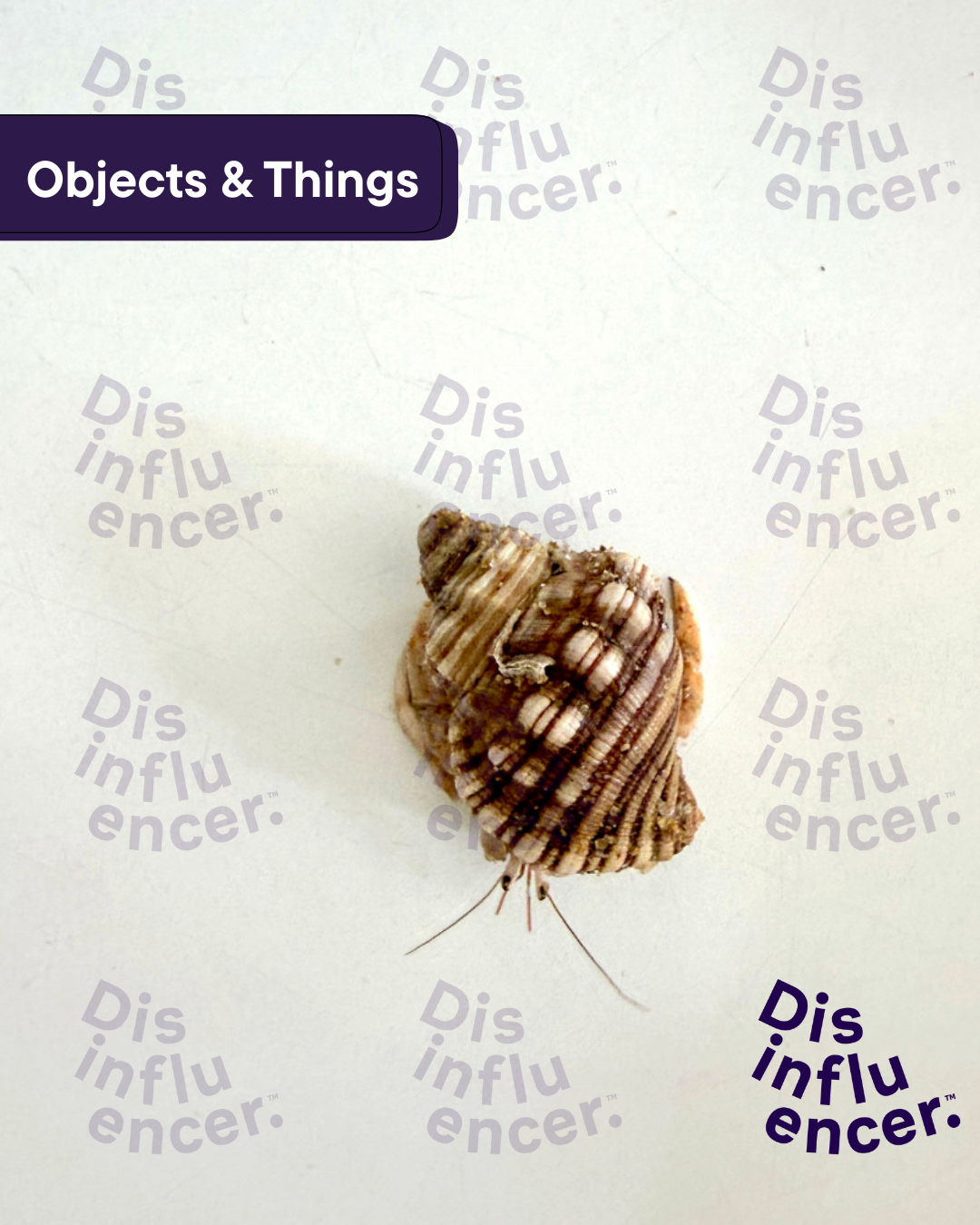
Image Description: A photo of a Hermit Crab from the disinfluencer inclusive stock library. Image Description also in alt txt.
Let’s talk low-fi images
Let’s takl about low-fi images of obejects and things
Late last year I started taking photo's of Josh's face each day at hospital, mainly to keep an eye on the swelling in his face and colour, the swelling from a certain medication he was on and the colour, coz he was sick ... the swelling and shade of green expected but day in and day out I wanted to see if it was better or worse, if I had to flag with the Drs.
Than coz I was spending so much time at hospital I used to go on little adventures and discovered, sensory rooms and music rooms and telephone boxes and I started taking photos, as inspo for my disinfluencer images moodboard ... and then a client had a specific request and tight turn around (they wanted photos of headphones) so I shot them on my phone and client was so happy and it got me thinking ... what other things can I shoot low-fi for the library.
So I have been shooting lots of "objects and things" + "real life" on my phone and added them to disinfluencer images.
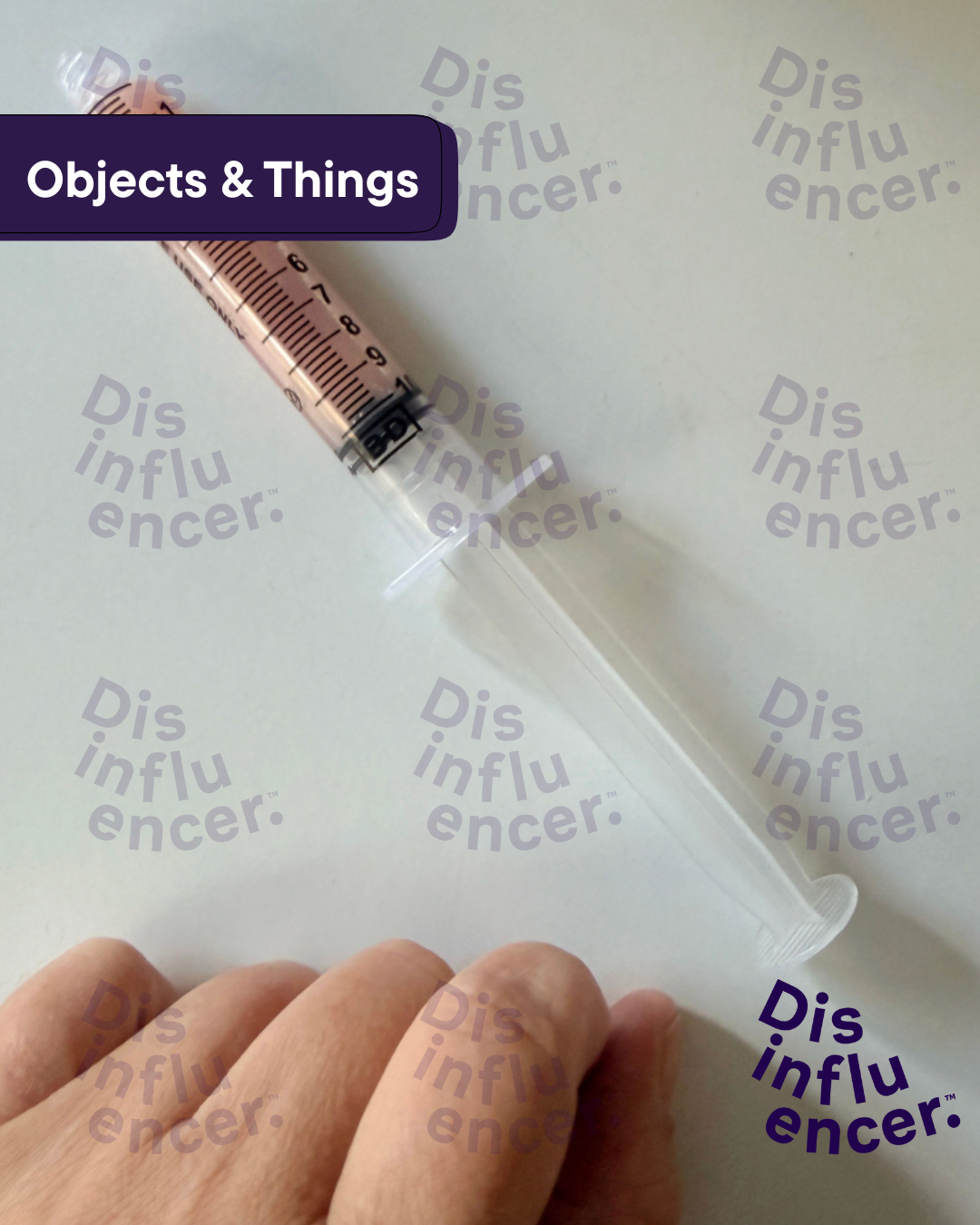
Image Description: An image from disinfluencer images RAW: An image of a 10ml syringe with pink medicine liquid in it on a bench ID in alt txt.
I flipped flopped about making it seperate, separate and cheaper and I was pretty close to leaving them it out, but have decided for now I will invite all our clients for feedback and offer any low-fi images FREE and exclusive of your package.
I think it is super cool, but it isn't up to me, I will be showcasing some shots here and over on the gram and linkedin so you can check them out, would love to know what you think and what else I should shoot.
RAW: Objects and Things is no. 3 on my 2026 Predictions, on the BLOG
In all fairness I do have a degree in design and studied photography and these images are sans people, so no images of people which is 92% of the library are professionally shot and nothing will change, this is just a little bonus, if you want to have a sticky beak, grab a package and grab some extra images for FREE!
Simone
PS - Photo journaling is a thing, do you do it or is it just me?
6 predictions for 2026 // The Disinfluencer Edition.
Recap: My word for the year for 2025 was “integration” I had to put all the things we do … inclusion, access and representation in one place, our storefront ie. the website., hen I had to systemise it better AND than I had to rebuild the website and create a sales and marketing strategy.
I was all hands on deck and finalised the year with a sprint, putting the website together will all the things, than my life imploded 🤯
I am still in a bit of shock over the implosion, don’t have time to dwell on it really, my biggest fear came to life. Josh not only getting sick and then getting sicker from being sick, as well as rapidly losing his transplant and going into renal failure. He is already on week 5 (of 6) workup of his dialysis regime, which will be 3 times a week till … well always …
So I am thanking my past self for all the “integration” because my word for 2026 is landed, so there’s no biz development, nothing to re-build, it’s just doing the do, sitting in the chair, with our infrastructure for brands to plug and play and get inclusion right!
So while I ease back into it and watch all the ins and outs and predictions, I have a few of my own.
Calling people in: So many people want and sometimes expect me to call brands out. But real change doesn’t come from shame. I am always speaking to brands who want to be inclusive, who want to learn, who want to do more, so we need to start calling people in if we want real, lasting AUTHENTIC change around the wor(l)d of disability.
Micro Learning: When I started disinfluencer I had a landing page and I was waiting for a “expert” to do my website widget. After being fobbed off yet again, I watched a youtube tutorial and did it myself. While we all have AI in our pocket, let’s not lose our love of learning and lust for moments of micro learning instead of AI slop!
Low fi images: It’s not just the gram but in a world of AI (don’t even get me started on AI imagery - another day for that one) Want to build trust? Go low-fi from your images to turning up online, everyone is over the polish, people want real and there’s nothing more real than in the moment content, BTS or images that no AI prompt can truly create!
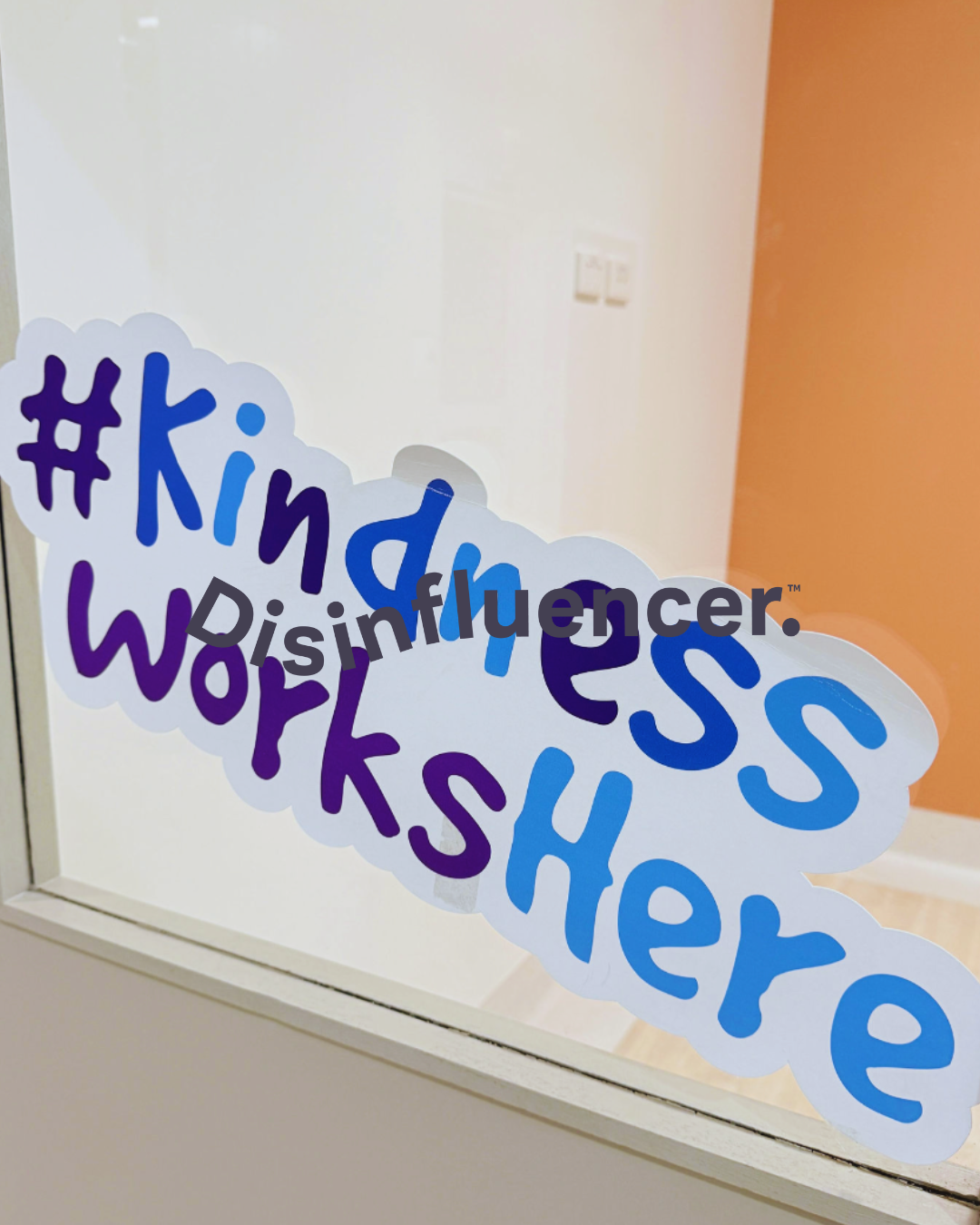
A photo of an office with the words #KindnessWorksHere from our RAW - Objects and Things category in the disinfluencer inclusive stock library. Image Description also in alt txt.
Real long form content: What I have started doing is creating my content (visuals) and then voice noting captions, I stole this idea from my kids who don’t type to search, just voice note, and as a left hander who always gets an “@” instead of a return on my screen keyboard, voice noting is the way to go and then obviously, once I get started, you get an essay not a nice and neat short sentence hook, bait and switch. Although I am not voice noting this one, the whole idea behind this point is the blog THIS BLOG all content will start here on the blog on our website and will be chopped and distributed across channels during the week. I love reading newsletters and my long form IG has been performing really well, so more of that from me and hopefully you (DM your must read newsletter to sign up to!)
Accessibility Statements on websites: Please, please PLEASE get yourself an Accessibility Statement on your website! While you could go to mine and copy and paste it, I do have a micro tool you can use because it isn’t just some random text, it is a thing you can do and implement across your business, from events to hiring that can not only attract the right people and customers, but also help your SEO!
Brands big and small will come to us: I am super happy to say this has already started to happen, with CBA but I would love some FMCG [ fourntwenty, m&ms & oreo I am looking at you ] And ofcourse Apple not the fruit the tech giant! I know they don’t need our help, and that’s exactly why it would be exciting to work with them, not in the obvious way of booking talent for imagery, but through stories. people just using their products in everyday life.
Josh does this all the time: watching YouTube, listening with Beats, with voice commands, searching, exploring. Not as assistive tech, not as a case study, just as a consumer. That’s the perspective brands rarely get, real life, unpolished, and inclusive without needing to be performative.
So there you have it, my 2026 predictions for me, disinfluencer and for any business or brands wanting to be inclusive. Work or learn with us Here and HERE
Simone
ps - If I ever won lotto (I don’t even play) I would option the rights to a few of my favourite Romance novels, so we could see a love story blow up like Heater Rivalry but instead of mm romance, it will be disability! Listen to me chat about this with my mate Jo from Studio Talent Collective